
From Rival States to Jin
The Romance of the Three KingdomsThis flow traces the balance among Wei, Shu, and Wu through their conflicts, then follows Sima power to the reunification of China.
increasing Bearing strength in each event
 decreasing
Bearing strength in each eventdecreasingThree Centers of Power
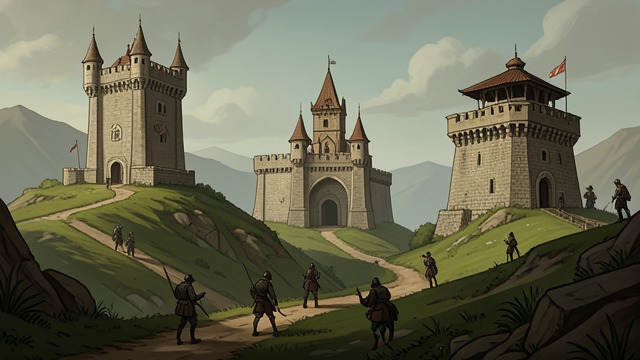
A Divided Political Landscape
The Strategic Balance
Cao Cao dominates the north, Sun Quan holds the southeast, and Xuande builds a base in the west. None can easily eliminate the others.
Alliance and Competition
Cooperation becomes necessary against stronger opponents, but each kingdom also watches for opportunities to expand. The three-state balance is both a defense and a source of continuing conflict.
Shu Claims Han Continuity
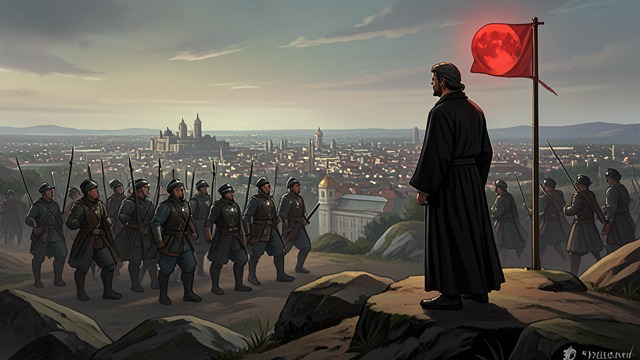
Legitimacy in the West
A New Imperial Claim
After Cao Pi’s accession, Xuande proclaims himself emperor and presents Shu as the continuation of the Han. The claim gives political meaning to his rivalry with Wei.
The Cost of Revenge
He then attacks Wu to avenge Guan Yu, despite advice to focus on Wei. Personal obligation and state strategy collide, setting the stage for disaster at Yiling.
The Sima Ascendancy
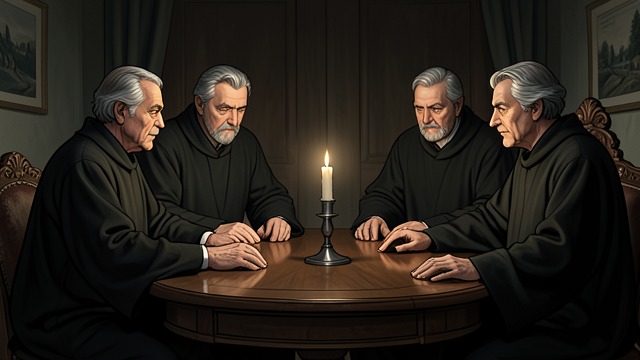
Power Moves Behind the Throne
Regents and Coups
Sima Yi and his sons use military command, court alliances, and calculated coups to take power from the Cao rulers while leaving emperors in place.
A Dynasty in Waiting
The Sima family first governs through Wei’s institutions, then openly prepares to replace them. Political continuity becomes the means by which the old dynasty is displaced.
Shu Falls to Wei
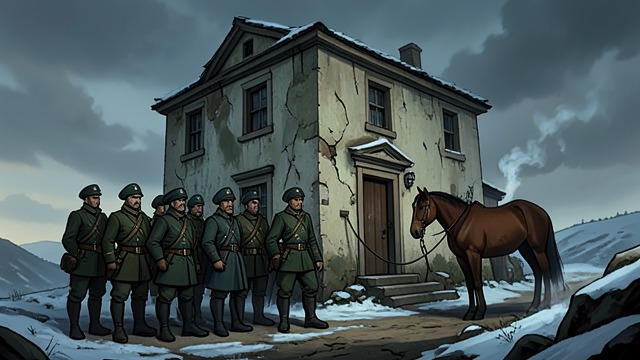
A Kingdom Exhausted
Repeated Northern Campaigns
Jiang Wei continues Kong Ming’s ambition to defeat Wei, but repeated campaigns drain Shu’s resources while court corruption weakens its ability to respond.
Surrender at Chengdu
Deng Ai’s route through difficult terrain and Zhong Hui’s advance bring the Wei armies to Chengdu. Liu Shan surrenders, ending the Shu kingdom without a final field victory for Jiang Wei.
Jin Reunifies the Realm
The Last Kingdom Falls
A New Imperial House
Sima Yan replaces the Wei dynasty with Jin, while Wu remains independent under Sun Hao. The political transformation that began with the Han’s collapse is nearly complete.
End of Division
Jin’s campaign against Wu succeeds, and Sun Hao surrenders. The Three Kingdoms are reunited, closing the cycle of fragmentation that has governed the novel’s history.
After the Red Cliffs campaign
AD 221
From the late reign of Cao Rui to the rise of Sima Zhao
AD 263
AD 265–280
